Programming Drums That Feel Human
Write a drummer's job, not a random grid
Programmed drums feel human when the pattern has musical priorities, playable relationships, controlled variation, and a believable response to the arrangement. Random timing and velocity changes do not by themselves create a convincing human performance.
Begin with kick, snare, and a simple timekeeping part. Make that core groove support the vocal or main instrument before adding fills, percussion, and tiny ghost notes with complicated emotional backstories.
Establish the main pulse
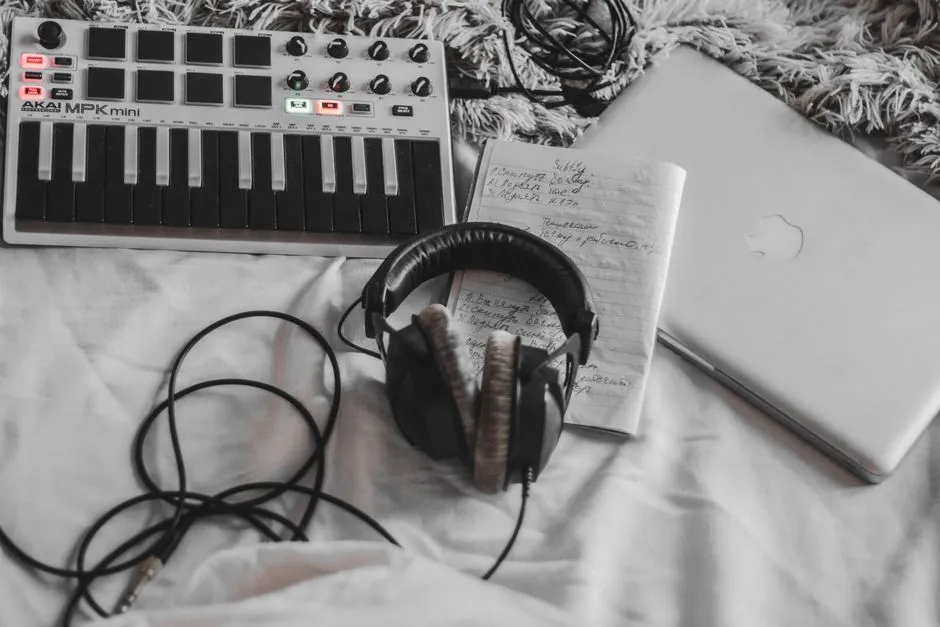
Record or draw the basic pattern in a MIDI track using the beginner MIDI guide. Loop a section long enough to hear whether the groove settles or irritates. Check the relationship between kick and bass, then the relationship between snare and the song's backbeat or accent structure.
If the groove works only while soloed, it does not work yet. Drums are employed by the song, not operating an independent rhythm consultancy.
Shape velocity with intention
Accented hits should usually differ from connecting hits, but the instrument must respond naturally to those changes. Some drum libraries switch samples or tone with velocity; others mainly get louder. Listen to the result rather than assuming the numbers carry universal meaning.
Build a dynamic hierarchy: principal accents, ordinary pulse, and softer detail. Avoid making every hi-hat identical unless the rigid effect is deliberate. Also avoid a perfectly smooth repeating staircase that advertises the editor more loudly than the drummer.
Use timing as phrasing
Before moving notes, decide whether the groove should feel straight, swung, urgent, or relaxed. Shift important relationships carefully and preserve a strong pulse. Moving every event independently can dissolve the pocket.
Play the part on pads or keys when possible, then correct only distracting errors. If drawing notes, borrow timing relationships from your own tapping rather than applying generic “humanize” settings blindly.
Respect limbs and transitions
Imagine what hands and feet are doing. Avoid impossible overlaps unless the production intentionally exceeds human performance. This does not require writing only what one particular drummer would play; it requires understanding why each hit belongs.
Create fills that lead into a new section, answer a vocal gap, or increase energy. A fill every fixed number of bars can make the drummer sound contractually obligated. Use the arrangement guide to place changes where the song changes.
Vary patterns at meaningful moments
Duplicate a strong core groove, then make small changes around section boundaries, lyric accents, and transitions. Remove elements to create space before adding new ones. Often the difference between verse and chorus is a wider cymbal pattern, stronger backbeat, altered kick relationship, or added room sound—not a complete rhythmic identity crisis.
Keep several variations named clearly. Compare them in context and delete options that no longer serve the production.
Choose sounds as one kit
Kick, snare, cymbals, and room layers should feel like members of the same sonic scene unless contrast is intentional. Tune, envelope, ambience, and balance can matter more than replacing the chosen kit.
Compare the overall impact using reference tracks and focus on general relationships such as brightness, density, and section lift. For audio placed in the production, choose samples from a library whose license covers the intended release or obtain written clearance from the rights holder before distribution.
Print and review the performance
Render the drum part to audio and listen away from the piano-roll display. Check fills at boundaries, cymbal tails, clipping, and whether small details survive or clutter the arrangement. Repeated transient-heavy listening adds to daily noise exposure. NIOSH says noise-induced hearing loss is permanent and that risk depends on level and duration; reduce both as needed and review its noise guidance.
The most convincing programmed drums do not constantly announce their realism. They make the next lyric, chord, or bass movement feel inevitable. If listeners begin air-drumming, the velocity spreadsheet may take the evening off.
Music-production guidance here is general education. Protect your hearing, use electrical equipment as directed, keep backups, and obtain appropriate rights or permission for material you record, sample, distribute, or release.