Use Reference Tracks Without Copying the Record
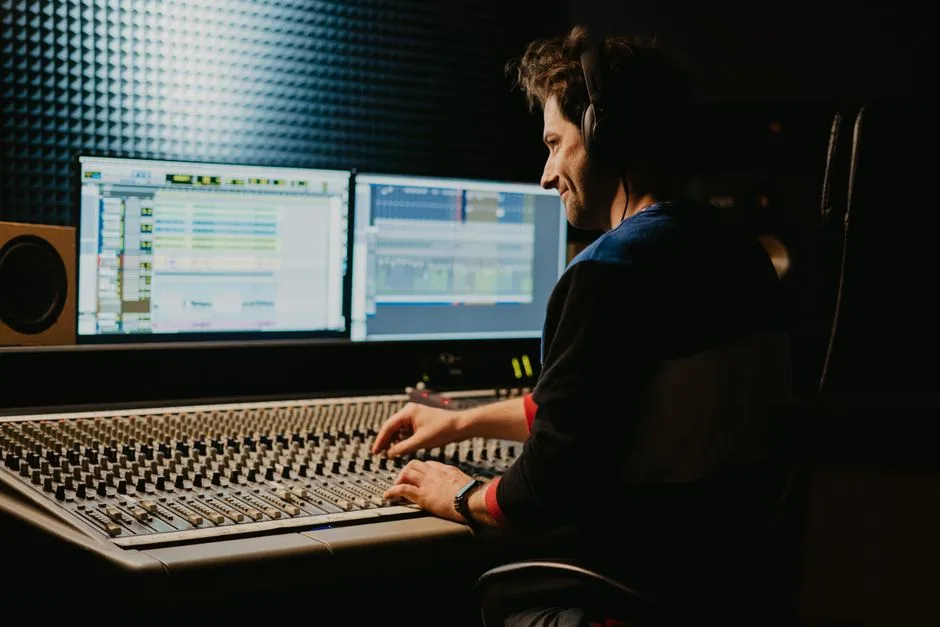
Ask a reference one question at a time
A reference track is a well-chosen song used to calibrate listening and compare broad production relationships. It can reveal whether your mix is unusually dark, bass-heavy, narrow, distant, or dynamically flat. It cannot tell you the exact settings your different arrangement needs.
Choose references with some relevant features: genre, instrumentation, vocal role, tempo, density, or emotional scale. One song rarely matches everything, so use a small set rather than appointing a single record supreme ruler of all snare drums.
Route references outside mix processing
Use the reference through a route your recording software supports, or switch to it through your regular playback system. Keep it outside the mix bus so your processors do not alter the comparison. Label the route and exclude the reference from every project handoff and public delivery package.
Label the route clearly and confirm that muting the mix does not change the reference's processing. Confused routing can make a useful comparison confidently wrong.
Match perceived loudness
Commercial releases may play louder than an unfinished mix. Reduce the reference until its perceived level is similar before comparing tone, punch, width, or depth. Otherwise, the louder option often seems fuller and more exciting simply because it is louder.
Recheck matching for different sections. A quiet verse and dense chorus may not create the same perceived relationship.
Compare broad categories first
Listen briefly for one feature: lead-vocal position, low-end weight, brightness, drum impact, stereo shape, ambience, or section lift. Switch back to your mix and describe the difference in words.
Use the EQ guide for purposeful tonal changes, but resist tracing an analyzer curve. Different keys, notes, instruments, and arrangements naturally create different spectra.
Study arrangement as well as tone
Sometimes the reference feels clearer because fewer parts play at once, not because its equalization is magical. Compare register, note length, density, repetition, and transitions using the arrangement guide.
If the reference chorus expands through backing vocals and cymbal texture, adding low-frequency boost to your crowded chorus answers the wrong question with impressive commitment.
Take short, quiet comparisons
Switch frequently enough to retain perspective but not so rapidly that you stop hearing phrases. Noise exposure depends on both sound level and time. NIOSH says noise-induced hearing loss is permanent and describes 85 dB(A) over eight hours as an occupational limit, with allowable time halved for each 3 dB increase; it also cautions that the limit is not a recreational-listening guarantee. Reduce level and exposure time. See NIOSH guidance.
Check several moments rather than one loop. Intro, verse, chorus, and ending may use different balances intentionally.
Translate the lesson into your song
Write a specific note: lead is too far back in verse, low end changes between notes, chorus lacks side contrast. Make one revision and repeat the comparison. Follow the broader translation workflow on other systems.
Reference general craft relationships and preserve your own musical identity. If a production will include third-party audio, use a sample library whose license covers the intended release or obtain written clearance from the rights holder before distribution.
Know when to stop referencing
Once the mix has a coherent perspective, reduce comparisons and listen through it as a listener. Endless switching can pull one song toward several incompatible targets.
A reference should sharpen judgment, not replace it. End the comparison when it stops producing a specific, useful observation about your own arrangement or mix.
Music-production guidance here is general education. Protect your hearing, use electrical equipment as directed, keep backups, and obtain appropriate rights or permission for material you record, sample, distribute, or release.